Blog

  • The myth that a framework means you are safe

    The myth that a framework means you are safe

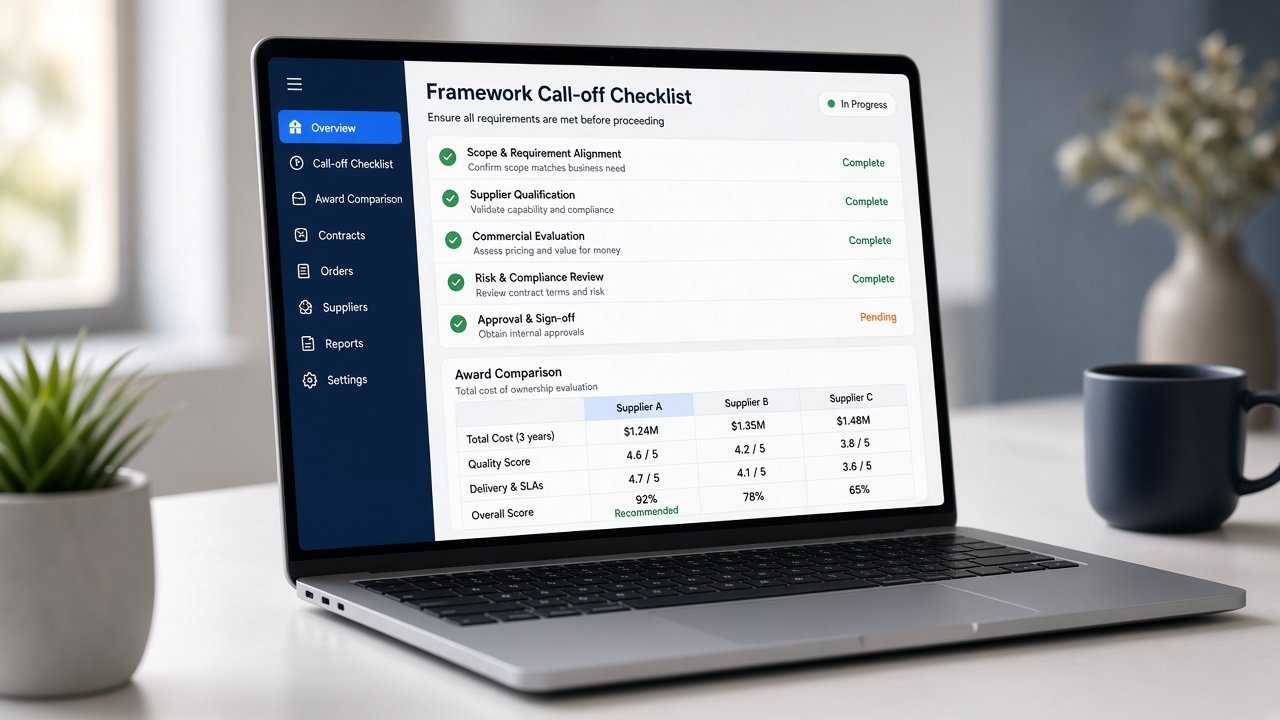
    The myth that a framework means you are safe still comforts busy teams. Pick a lot, run a mini-competition, award fast. In practice a framework only moves risk; it does not remove it.

    Frameworks are useful. They are not a shield. A call-off can still fail on the requirement, the evaluation, or the commercial terms you accepted without reading the parent agreement carefully.

    Why the myth fails

    Someone else designed the framework for their problem, their suppliers, and their risk appetite. Your need may not match. Lots can be too broad, pricing schedules can hide whole-life cost, and direct awards can skip the challenge you actually needed. Audit and challenge still ask whether you used the route properly and whether the award is defensible. “It was on a framework” is not an answer.

    Teams also treat framework membership as proof of quality. Being listed means a supplier passed a gate at a point in time. It does not mean they can deliver your outcome next quarter.

    What to do instead

    Start with your commercial problem, then ask whether this framework is the right route. Check the lot scope, the call-off rules, the evaluation freedom you still have, and what you cannot change. Write a short call-off that tests the outcome you need, not only the catalogue description. Keep an evaluation trail as clean as you would for an open tender. If the framework cannot carry that, use a different route.

    A practical next step

    Before your next call-off, open the framework and answer three questions in writing: does this lot fit the problem, what must we still evaluate, and what would a bad award cost us later? If those answers are fuzzy, a short thirty-minute call is often enough to reshape the call-off before you issue it.

  • The myth that lowest price always wins

    The myth that lowest price always wins

    The myth that lowest price always wins still shows up in boardrooms and evaluation rooms. It sounds disciplined. In real competitions it often buys you the wrong outcome.

    Price matters. It is rarely the whole story. A bid that undercuts everyone on day one can load risk into delivery, cut quality where you cannot see it, or force change notices that erase the “saving” by month six.

    Why the myth fails

    Lowest price wins when the requirement is truly commoditised, the specification is tight, and switching cost is low. Most public and international procurements are not that simple. Whole-life cost, delivery risk, capacity, and past performance change what “cheap” means. If your scoring only rewards the bottom number, suppliers will race there and leave the hard problems for later.

    What to do instead

    Write the commercial problem first. Then decide what must be pass/fail, what can be scored on quality or risk, and how price enters without drowning the rest. Use whole-life or total cost of ownership where it fits. Make the evaluation trail show why the award is defensible, not only why it was cheapest.

    A practical next step

    If your last few awards were driven by price alone and the aftercare has been noisy, review one recent file: would a modest quality or risk weight have changed the shortlist? A thirty-minute call is often enough to reshape the next competition before you issue it.

  • Keep the evaluation trail when you use AI in a procurement

    Keep the evaluation trail when you use AI in a procurement

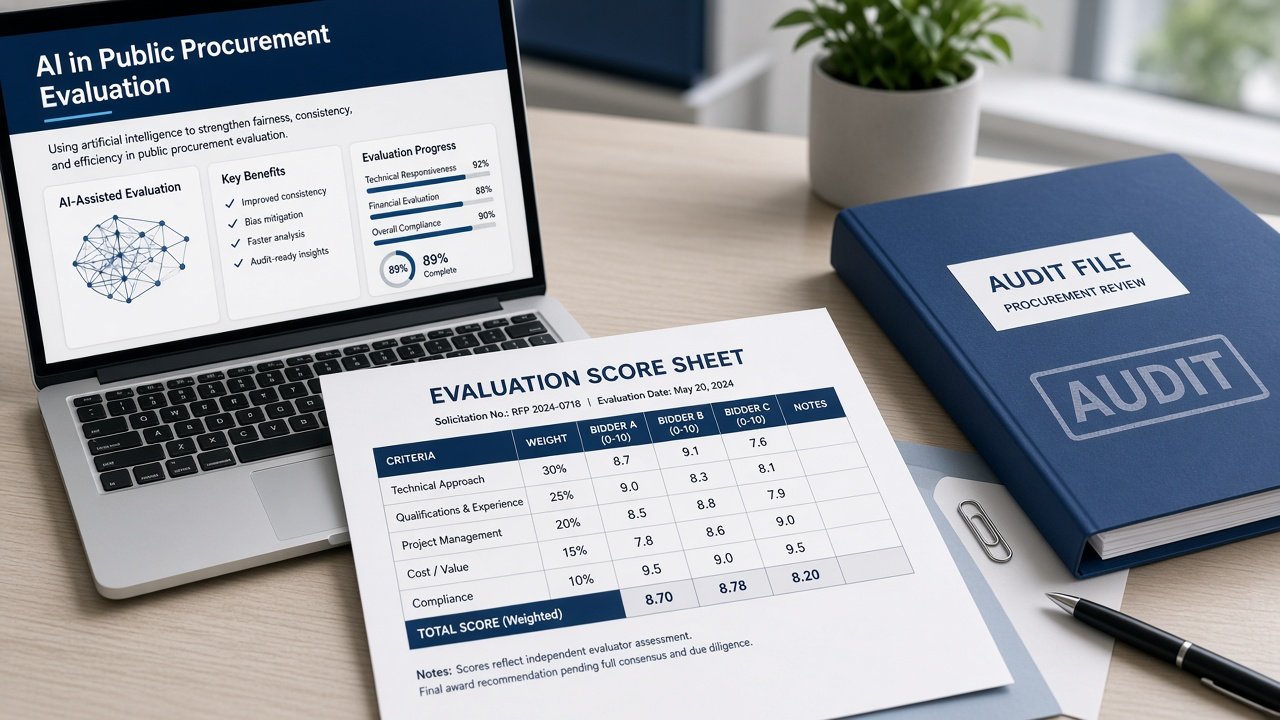
    Laptop, evaluation score sheet and audit file on a desk

    AI can speed drafting and sorting in a live competition. It must not invent scores, hide why a bidder won, or weaken the audit trail you will need if someone challenges the award.

    Use tools on the work you already control: checking consistency in a long specification, clustering clarification questions, or spotting gaps before publication. Keep humans on requirements, evaluation judgments, and the record of why a score was given.

    If a tool cannot show its working in a way your audit team accepts, do not put it in the evaluation path. Start with the process you must defend, then see where a tool saves time without taking the decision away from you.

    Book a 30-minute call about procurement services.

  • Start with the commercial problem, not the tender document

    Start with the commercial problem, not the tender document

    Desk with tender documents and a commercial flowchart sketch

    A tidy tender that answers the wrong question still fails. Before you draft the specification, name the commercial problem in plain language: what outcome you need, what constraint you cannot move, and what a bad award would cost you later.

    Write that problem down where the evaluation team can see it. Then design the competition around it — requirements, questions, and scoring that test the same thing. Tools and templates help after that step, not instead of it.

    If you are stuck between two shapes of competition, book a short call and walk the problem for thirty minutes. The document usually gets easier once the problem is clear.

    Book a 30-minute call about the commercial problem.

  • You do not need an AI strategy to improve a procurement

    Start with the work: the business case, the requirement, the evaluation. Then see whether a tool saves time without weakening the audit trail.